
Who Will Raise My Children?

That was my first and only thought at the moment I was diagnosed with breast cancer. At 45, with two daughters, aged 12 and 4, I was more terrified for them than I was for myself.
My eldest, was born in Thailand and was 3 years and 10 months old when I became her mum. Born in Hong Kong, my youngest was almost 1 year old when I became her mum, four years later. How could it be possible, I thought, for it all to be lost so soon?
The diagnosis marked another turning point for me. I finally understood what was driving my view of education, the role of schools and those who worked in them.
At that point, my future was uncertain. One thing, though, was clear: people working in schools, whether directly or indirectly, wouldn’t shout out, “My duty of care extends to raising your children if anything should happen to you.” And neither should they.
Schools aren’t homes. Those who work in schools aren’t parents to your children. Raising children isn’t done through a partnership between your home and your children’s school or between you and your children’s teachers. Instead, you have a relationship with the school and the teachers.
You might be wondering about the difference between the two.
Essentially, I do not believe that everyone involved with your children has equal responsibility for them - and that’s as it should be. In my view, it’s not a question of partnership. There is, however, an ever-evolving ebb and flow of people, knowledge and beliefs that have many and varied relationships with, and influence on, you and your children. And it’s the nature of this relationship we need to qualify.
Parents are responsible for raising children and raising them in their own way. My view has remained constant: I’ve raised my girls on my terms and on behalf of their biological parents.
Schools provide education services. But there is a tremendous difference between respectful appreciation of those services and unconditional trust in them.
Respectful appreciation of the role of a teacher and the role of a parent has always been an intrinsic compass for me. This is probably because, as a child, I always knew what I wanted to be - a mum and a teacher.
When I began teaching in 1989, however, I wasn’t fully prepared for the experiences I was about to have and where they would take me. The same was the case a decade later when I became a mum.
At the time of the cancer diagnosis, I had already invested twenty years in trying to tie a ribbon of mutual respect around the home-school relationship, through teaching, radio broadcasting, publishing, advisory work, business ownership and parenting.
It became clear that everything I had done and experienced during those twenty years was merely an apprenticeship. The real work was just about to begin.
Drawing on my experience, I took a dive into the depths of humanity to try to understand how the power imbalance between home and school had evolved, how the values of faith and family had been undermined and how we had fallen, unconsciously, into an unhealthy co-dependency with government with regard to school education and the raising of our children.
School education is highly emotional.
(excerpt from Your Children – Take The Lead On Their Education - Author Cheryl Lacey)
And it is deeply political.
A child’s years of schooling can span dozens of elections, and with each one the pendulum swings. New ministers, councillors, priorities, frameworks, and new school leaders. And, over time, across the western world, parents have been encouraged - gradually, almost imperceptibly - to relinquish to government the right to be responsible for raising their own children – including decisions about education.
Whether knowingly or willingly, many have.
Ultimately, the consequence of this constant change and relinquishment, is that values of faith and family have been compromised and in many ways erased.
But what endures despite political, policy or leadership change, is the local school community - the parents and grandparents who know their families best and teachers who know their students better than any plan a government has for them, and who will still be there when the next plan arrives.
That is the greater constant, and it deserves to be honoured as such.
Genuine Relationships
The beauty of a relationship as distinct from a partnership is that it allows space. Space for the home to be the home and the school to be the school, each respecting the rights and responsibilities of the other.
In a genuine relationship there is no need for overreach, because the distinction is understood enabling mutual respect and trust to grow and flourish.
When that understanding is a natural part of a school community - when parents, grandparents, teachers and leaders all know the distinction and honour it – everyone can benefit.
School Boards
And that is the essence of a school board. They’re comprised of parents, educators, school leaders and members of the community for good reason. It ensures a cross-section of representation and has the capacity to engage in rich discussion and debate over educational philosophy, service provision, consistency and, most importantly, what makes every educator, student, family and community unique.
Similarities yes. Differences yes. Identical, absolutely not.
School boards that know, understand and act on the distinction between a partnership and a relationship expect families to be informed and want participation in whatever capacity possible.
And it is here, this essential place where, other than private matters, nothing is off the table for the school community to know, understand, and be part of when change, growth, stability and possibility presents itself. There’s no secret society for secret meetings or closed door power, quite the contrary.
Educators Can Be Parents Too
Like me, many teachers have their own children too, and what they want for them is the clearest guide to what they stand for professionally for your children – their students.
Raising children is an honour and a privilege. That responsibility must be sincerely encouraged and never weakened by the quiet assumption that someone else always knows better.
Ebook Available Now
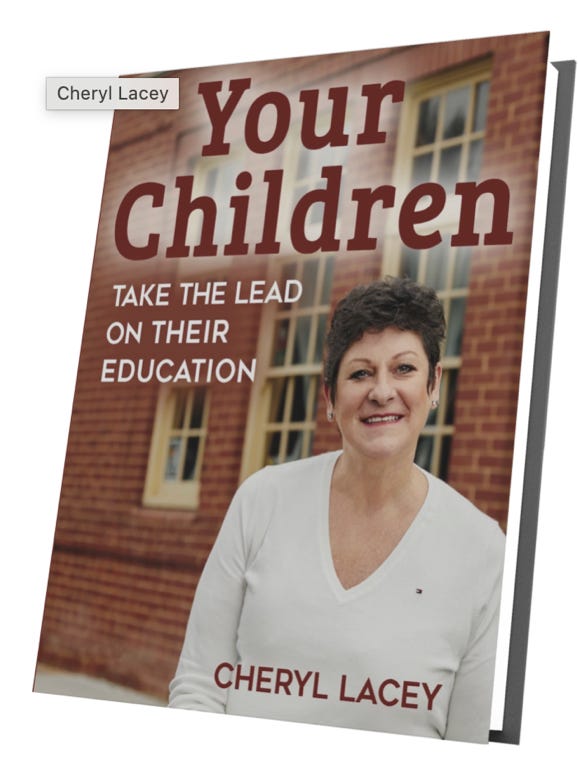
For your children…
Being students is one part of life. Schools have value and teachers are important. Being your children is for all of life. Your role as parent is supremely valuable and important all of the time.
Not everything that happens at home is the school’s concern. Everything that happens to your children at school is your concern. You can be the voice for change; you can make a difference.
They are... Your Children Take the Lead on Their Education.
Testimonial
Cheryl’s writing is forthright, concise and relatable. Her ability to combine knowledge, practicality and empathy makes this book an invaluable resource and a testament to her impact and influence. Her unwavering commitment to excellence is evident as she offers practical advice, real-life examples and actionable steps that resonate on a personal level and make for informative and thought-provoking reading. She creates a sense of camaraderie and offers authentic support and encouragement for parents who are navigating the complex and often dense landscape of education. This book is not just an educational resource. It is a transformative and invaluable tool that empowers parents to take the lead, with confidence, and be responsible advocates for their children’s education.
—Colleen Harkin, National Manager and Research Fellow, Institute of Public Affairs
Conversations On Education Community
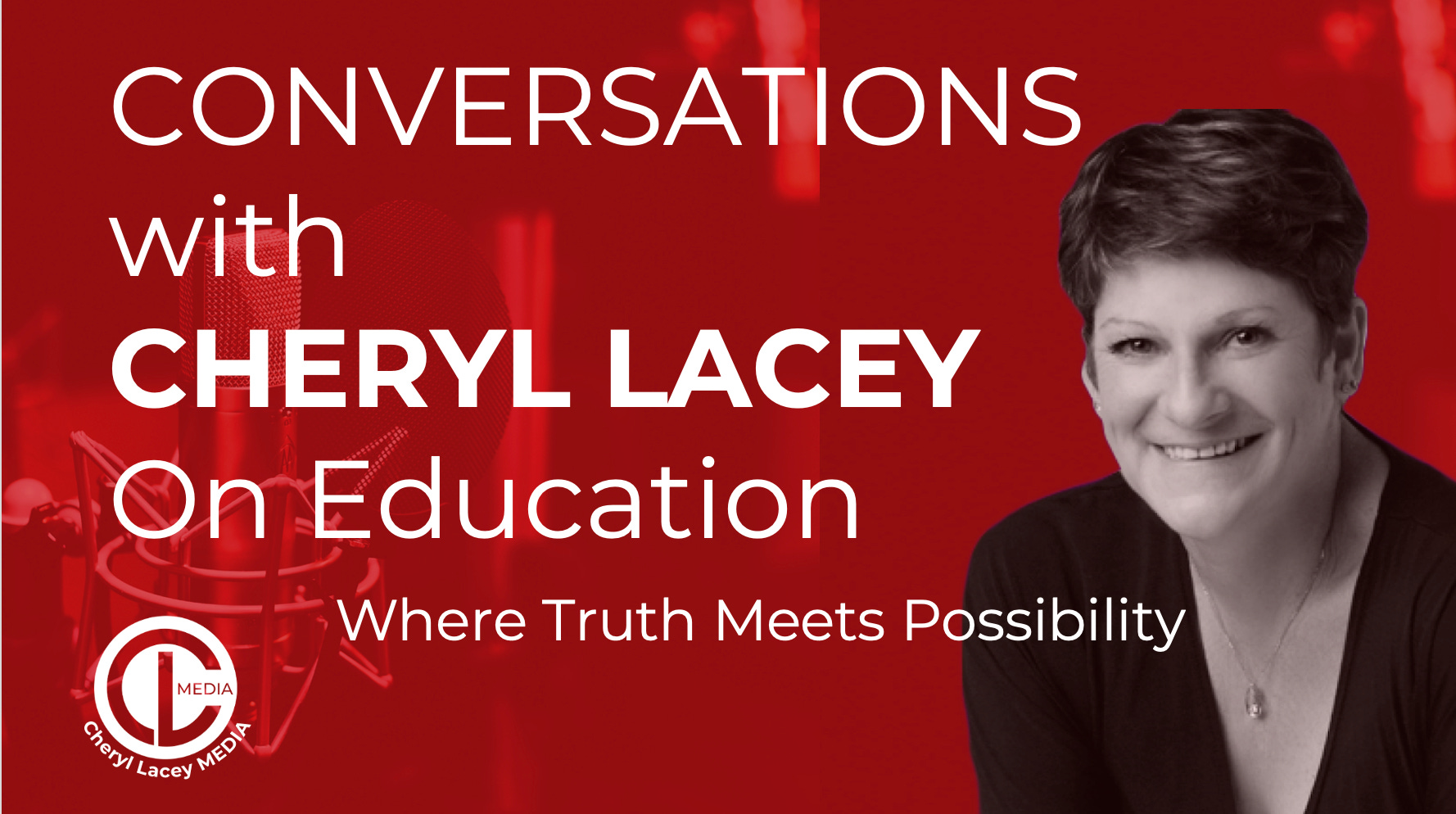
Join me live every Thursday at 7pm AEST for a conversation on education. We open with a 10-minute topic breakdown, followed by open conversation. No matter what your role is in education - leader, teacher, consultant, board member, parent, grandparent - this is the place to be for nsights, questions, answers and possibilities.
This weeks conversation: The distinction between partnerships and relationships
A must for anyone with an interest in education.
After all, it impacts all of us all of the time.
Casual: $12/month · Membership: $97/12 months
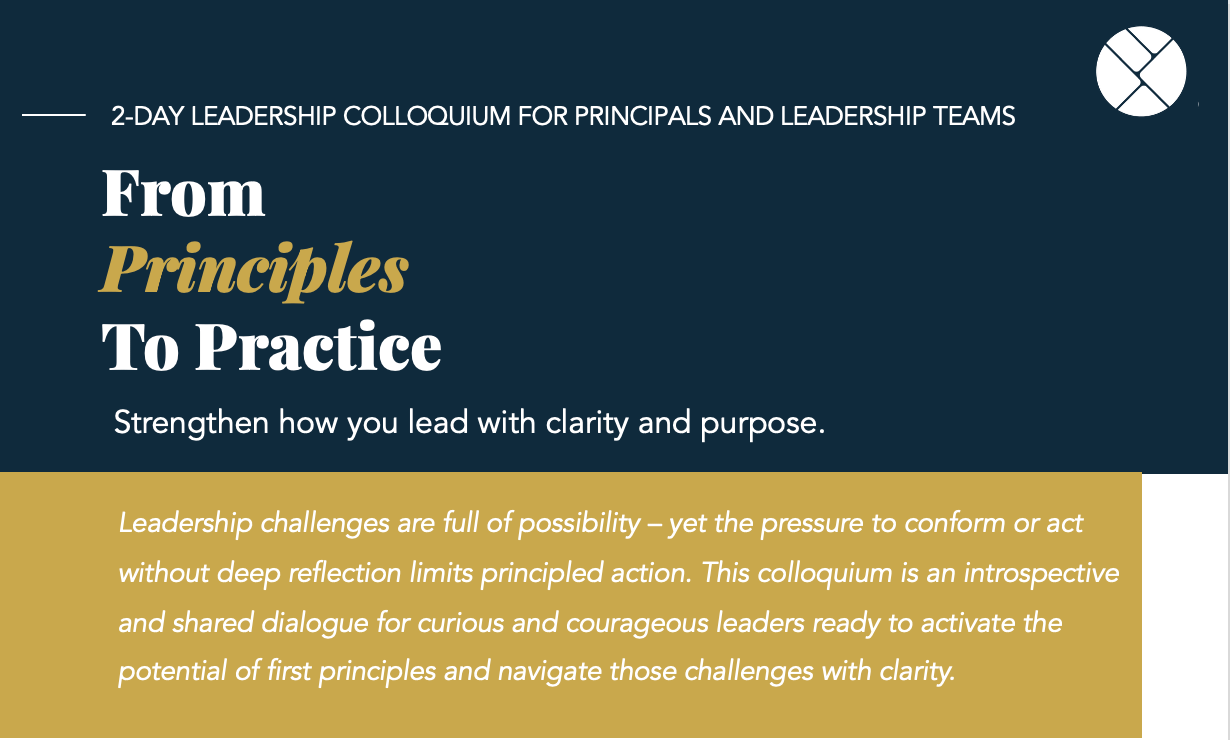
First Principles On Education Colloquium

PODCAST - The Cheryl Lacey Show
Where Curiosity Meets Courage
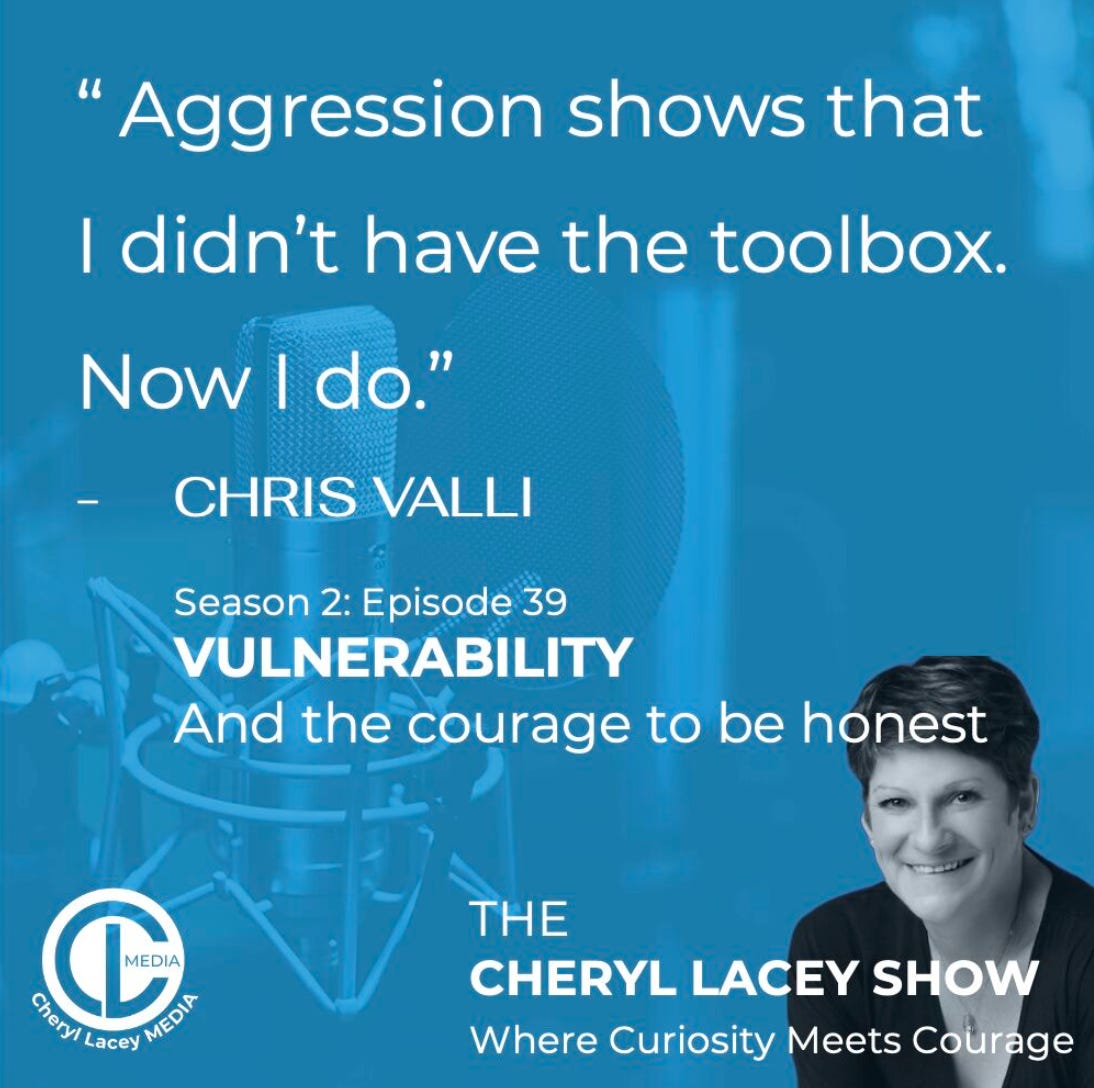
Losing a teaching licence in New Zealand was one of several crises that forced Chris Valli to confront difficult truths about himself. Following a period of professional and personal upheaval, some of it self-inflicted, he came to see vulnerability not as weakness, but as an act of courage and honesty.
In this conversation, Chris reflects on poor decisions, consequences, accountability, and where an honest examination of one’s own story can lead.